


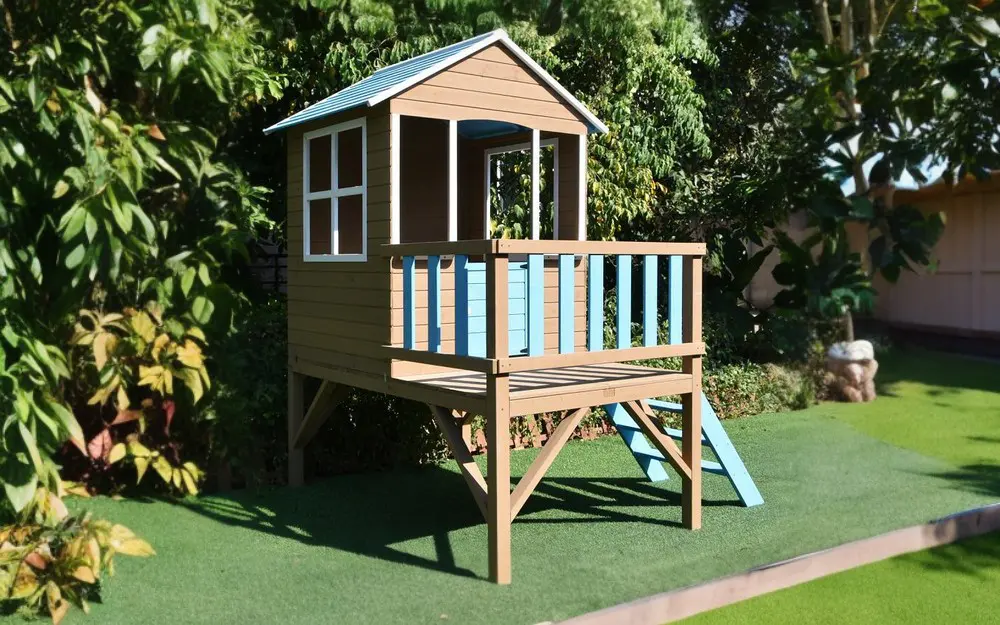



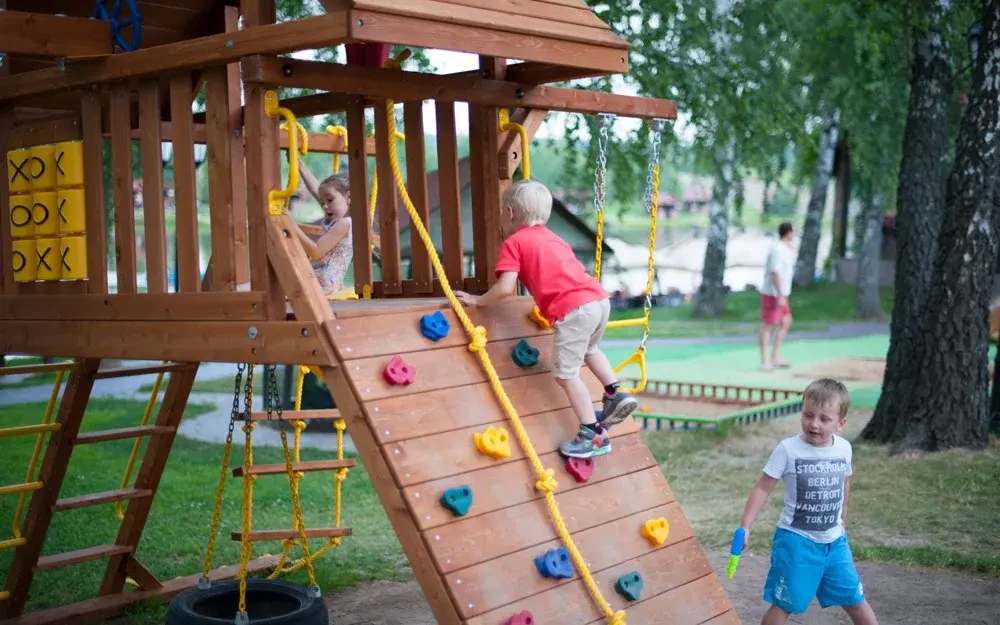


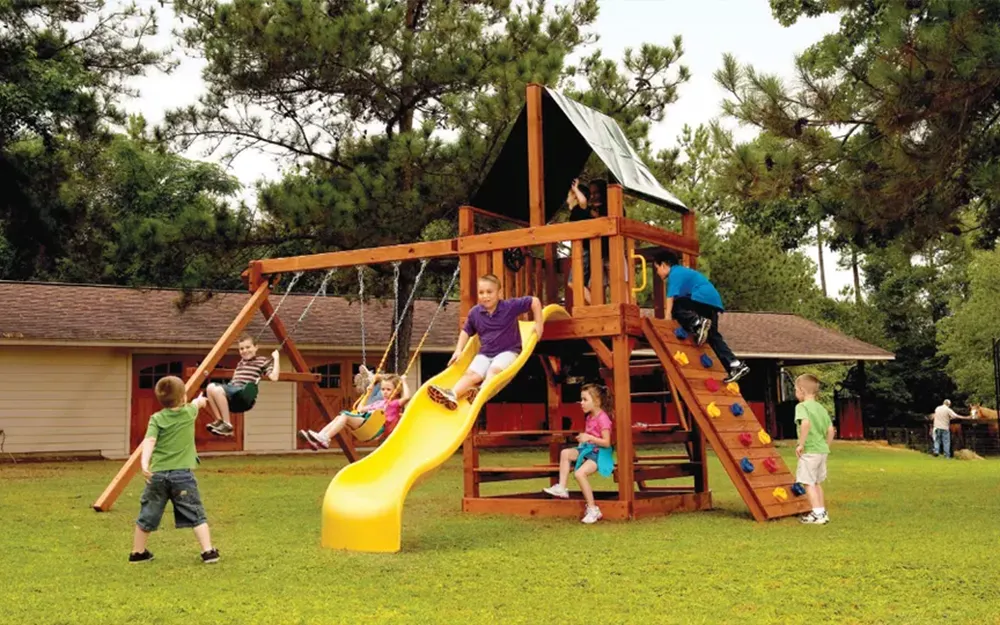
This wooden swing set is an indispensable facility for children’s outdoor play in many families, and it is widely loved for its natural beauty and durability. However, the safety of these recreational facilities is currently the most worrying issue. As a leading manufacturer based in Qingdao, China, affiliated with the British brand “KIDSALND,” we aim to clarify the basic safety standards related to wooden swing sets. Here, we will analyze this topic into five key points.

1. Structural integrity and material quality
The foundation of any safe wooden swing set device lies in the quality of the wood and the construction methods used. Usually, the wood undergoes standard treatments such as preservative treatment and drying (such as cedar or redwood) to ensure its safety. This wood can resist rot, pests, and the effects of the natural environment.
The next aspect is the connection between the wooden blocks. All connections must be firmly fixed using galvanized or stainless steel fittings to prevent rust and corrosion over time. Loose or damaged materials may cause instability, thereby increasing the risk of collapse or toppling.
Standards such as ASTM F1148 (Consumer Safety Performance Standard for Family Amusement Equipment) recommend that manufacturers conduct load tests to ensure that the swing device can safely withstand the expected maximum user weight and additional dynamic forces.
2. Design and safety spacing
A well-designed wooden swing device must have sufficient safety spacing around the moving parts. This includes ensuring that the swing, slides, and other components have enough space to prevent collisions or injuries. The entire area should provide a clear fall zone, typically extending at least 6 feet around the swing device.
The design guidelines also emphasize that wooden components should have smooth, rounded edges to avoid sharp edges or corners that could cause cuts or scratches. The openings or gaps in the frame should comply with the anti-pinch standard to prevent fingers or heads from being pinched.
3. Fixation and stability
To prevent violent swaying or toppling during climbing activities, the swing frame must be firmly fixed to the ground. For example, screw anchors or embedded concrete foundations can anchor the frame. The fixation method must comply with local soil conditions and installation requirements.
In addition, when purchasing from the manufacturer, it is necessary to provide them with clear instructions. The installation personnel should ensure that all components are flat and level to prevent structural weakening over time due to uneven forces. An unstable swing frame may lead to uncontrollable consequences.
4. Ground impact cushioning device
The ground beneath and around the wooden swing device should have good shock absorption properties to minimize the risk of injury from falls. Recommended ground materials include engineered wood fibers, rubber debris, sand, or safety mats, which can effectively absorb impact force. Grass or exposed soil is usually unsafe and may cause cuts or abrasions.
Safety standards for playgrounds (such as the standards specified in the “Public Playground Safety Manual” compiled by the U.S. Consumer Product Safety Commission) stipulate the minimum thickness and type of materials for playground surfaces. Maintaining these surfaces in good condition is crucial because over time, these materials may become compacted or shifted, thereby reducing their protective effect.
5. Regular inspection and maintenance
Even the safest wooden swings require continuous inspection and maintenance to ensure their safety throughout their lifespan. Common maintenance tasks include tightening screws, checking for cracks or deformations in the wood, sanding rough surfaces, and replacing worn or damaged components immediately.
The manufacturer of the product you purchased should provide users with clear maintenance plans and checklists. Regular inspections help to detect problems before they become dangerous, such as loose swing chains, broken beams, or rusted fasteners.
Adhering to comprehensive safety standards, such as material quality, reasonable design, secure fixation, shock-absorbing floors, and regular maintenance, is crucial for ensuring the safety of children when using wooden swing play equipment.