


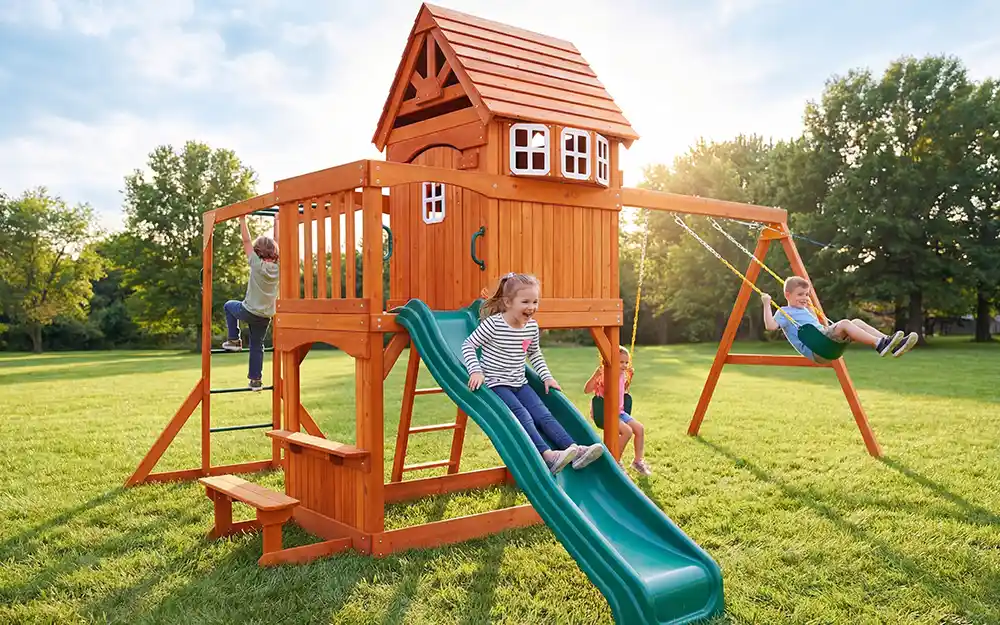
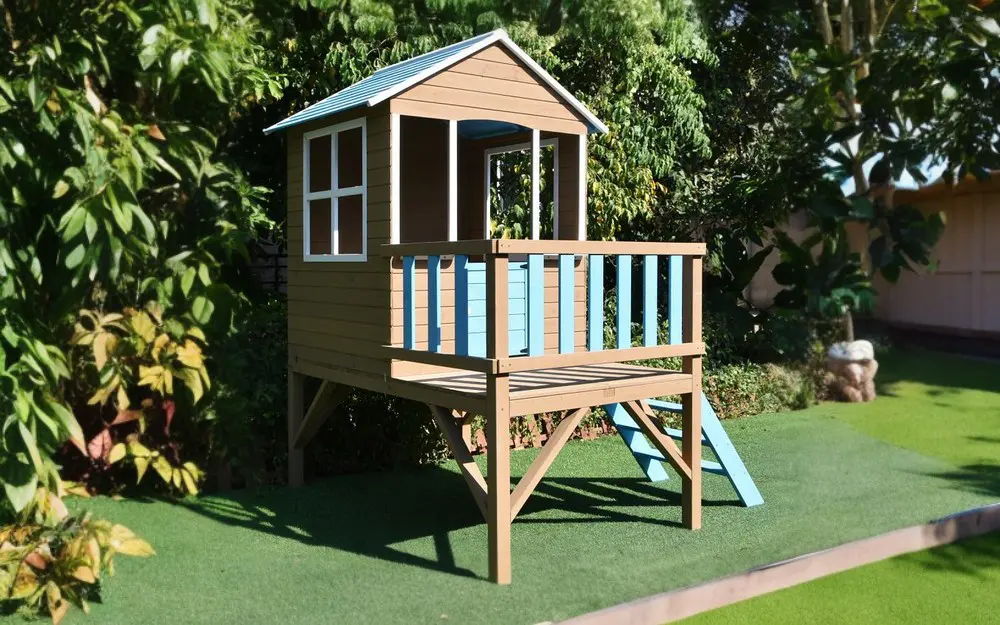





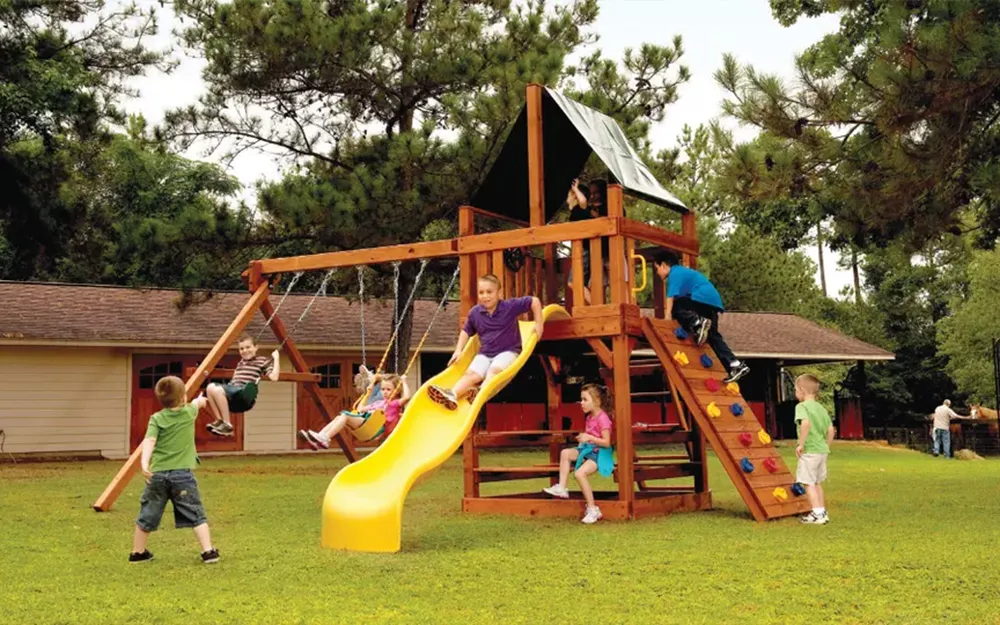
When shopping for play equipment for your backyard, you might find two playsets with seemingly similar prices, or at first glance, two playsets might look very similar in pictures—both featuring a wooden frame, one or two swings, and a brightly colored wavy slide. So, why can the price difference be so significant? On the surface, the two sets may appear to include almost the same things, but upon closer inquiry, the included accessories might be different, the materials used and warranty periods might vary, or the price might include shipping costs.
As parents, we all want to create a fun and active outdoor space for our children where they can climb and play freely every day. At the same time, we want to ensure that our budget goes toward a product that is safe, sturdy, and built to last. For this reason, we have put together this purchasing guide breaking down the cost breakdown of backyard children’s play equipment to help you choose the right product for your family.

1.Timber Quality and Post Thickness
Wood is the main component of a traditional playset and is usually the single biggest factor affecting cost:
Entry-Level Softwood: Uses thinner, fast-grown timber. Although the initial purchase cost is lower, it is more prone to surface cracking, splintering, and weathering. To maintain structural stability, it often requires frequent anti-corrosion maintenance.
High-Density, Weather-Resistant Timber: High-spec playsets use high-density, rot-resistant wood that has undergone specialized outdoor durability treatments. This type of wood can withstand rain, sunlight, and severe cold year-round.
At KIDSLAND, we select sustainably sourced, dense-grained timber treated with specialized processes to withstand harsh weather, ensuring that the playset remains sturdy, durable, and splinter-free through years of frequent use.
2.Size, Height, and Play Features
The scale and layout of the playset directly determine the materials used and the engineering design required:
Deck Height: Higher platforms require longer slides, taller safety barriers, and more secure ground anchors.
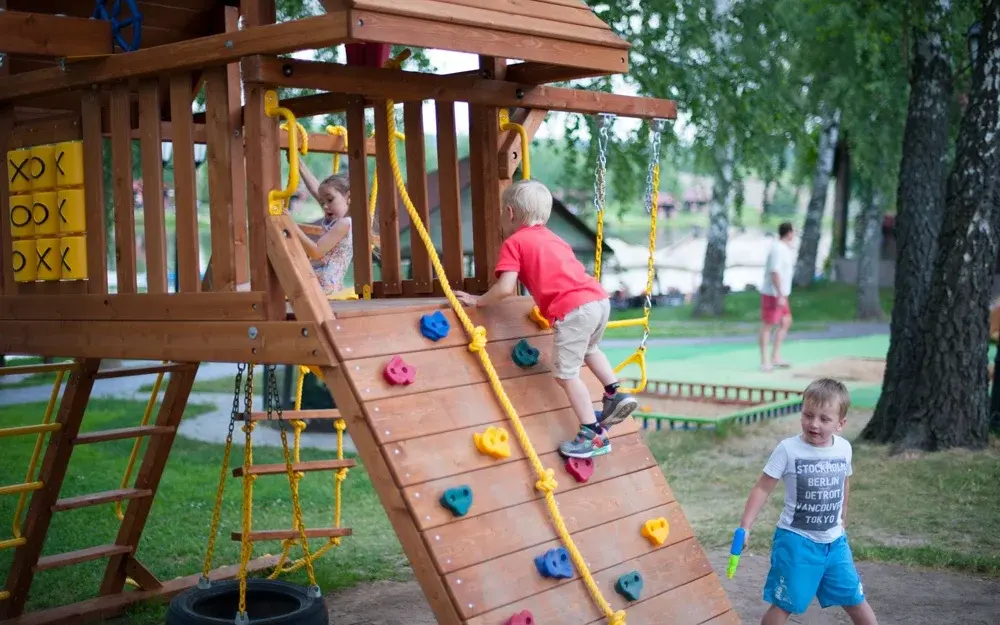
Additional Features: Features such as integrated climbing frames, rock climbing walls, climbing cargo nets, and built-in playhouses require additional brackets, hardware, and structural support.
Room to Grow: Although compact toddler play equipment has a lower initial cost, children quickly outgrow it. Choosing slightly larger products with modular designs and higher weight capacities can easily meet the play needs of children aged 3 to 12, offering better value in the long run.
3.Safety Hardware and Structural Engineering
When children are swinging freely on the swings, peace of mind comes down to the small parts that hold everything tightly together:
High-Strength Steel Brackets: Reliable playsets use welded steel corner braces and through-bolts, which effectively absorb the dynamic forces generated by swinging without easily coming loose.
Pinch-Free Swing Accessories: High-quality swings feature coated chains that prevent rust and protect children’s delicate hands from getting pinched; they are also equipped with commercial-grade ductile iron hangers to ensure smooth and quiet swinging.
Child-Friendly Craftsmanship: Recessed bolt heads, protective safety caps, and finely sanded rounded edges—while demanding high manufacturing standards—effectively prevent children from getting scratched.
Every KIDSLAND playset is manufactured strictly following international standards such as EN71, ASTM, and CE, backed by nearly 30 years of specialized hardware and playground equipment manufacturing experience.
4.The Real Calculation: Cost Per Year of Use
When weighing different options, the smartest benchmark is the “cost per year of use”:
A cheap playset priced at £350 that is structurally unstable and needs to be replaced after two summers costs £175 per year, with the added hassle of dismantling it.
A high-quality wooden playset priced at £1,200 that stays sturdy and safe for 8 to 10 years costs only about £120 to £150 per year—and still retains resale value when the kids outgrow it.
Investing in sturdy materials and certified hardware upfront not only provides greater safety and reduces maintenance, but also delivers value that far exceeds cheap alternatives in the long run.
Why Many Families Choose KIDSLAND
At KIDSLAND, we firmly believe that backyard playtime should be filled with laughter and adventure, giving parents complete peace of mind.
Backed by 30 years of manufacturing experience and a modern 50,000 m² production base, we seamlessly combine British design with industrial-grade durability:
Comprehensive Certification: Products are rigorously tested and comply with global safety standards including EN71, ASTM, and CE.
All-Weather Durability: Built with heavy-duty rust-resistant hardware and weather-treated timber.
Empowering an Active Childhood: From classic swing sets to fully featured climbing systems, allowing children to unleash their energy outdoors.
Browse the KIDSLAND Residential Playset Collection
Download the Full Product Catalog
Have questions about dimensions or specifications? Feel free to contact our team—we are happy to help you make the best choice!
Frequently Asked Questions (FAQ)
Q: Why choose wood rather than metal or plastic?
A: Solid wood blends naturally with the garden landscape; during hot summers, wood absorbs less heat than dark metal frames; furthermore, wooden structures have more substance and weight than lightweight plastic sets, offering superior stability.
Q: How do I maintain a wooden playset to keep it in good condition?
A: Check the bolts once every spring, and apply a coat of child-safe wood sealer or wood stain every 1–2 years to effectively protect the timber and keep it looking fresh for a decade or more.