


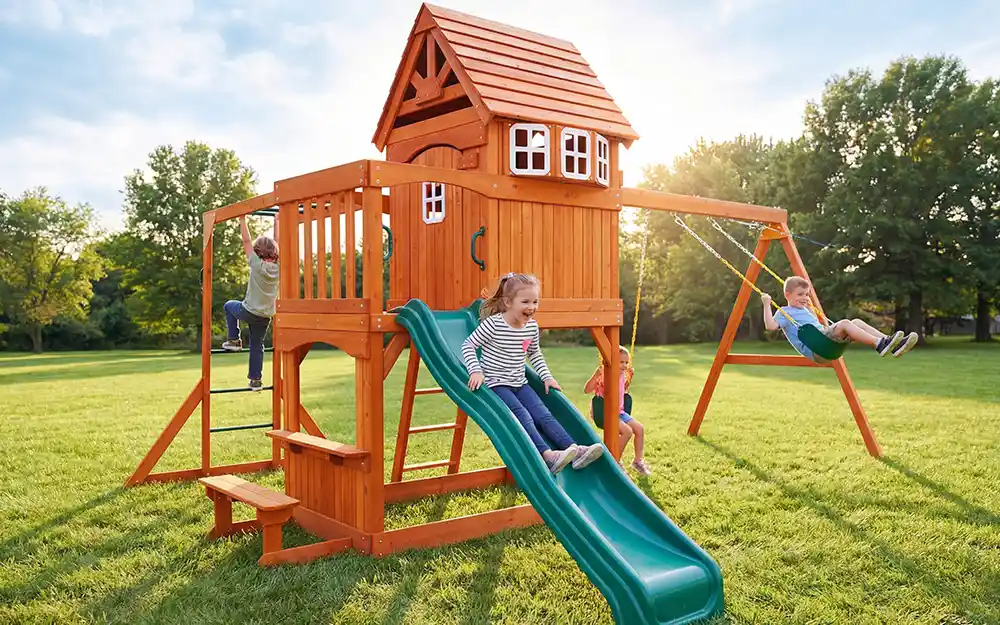
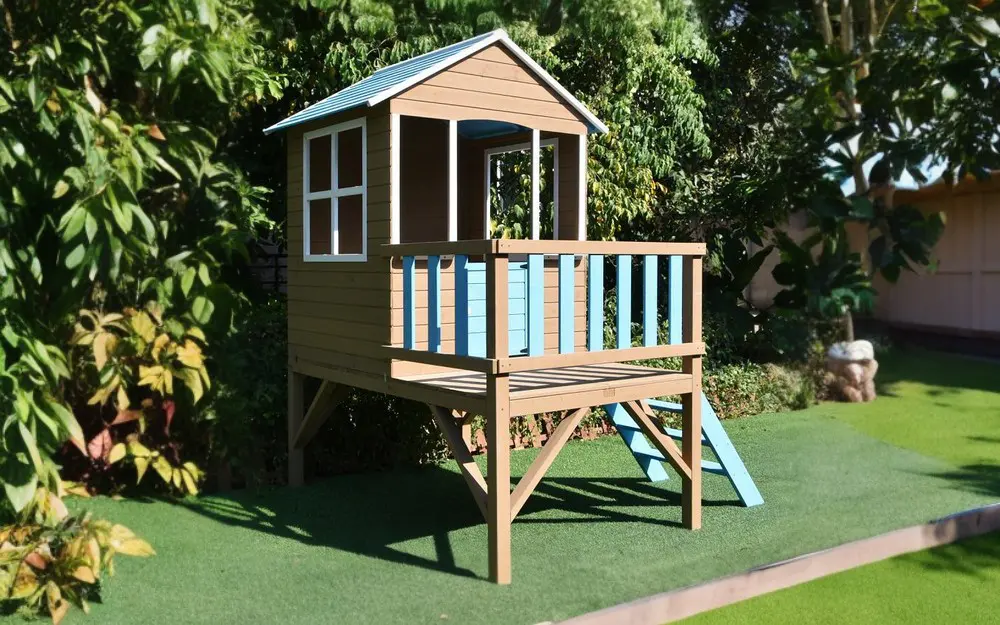



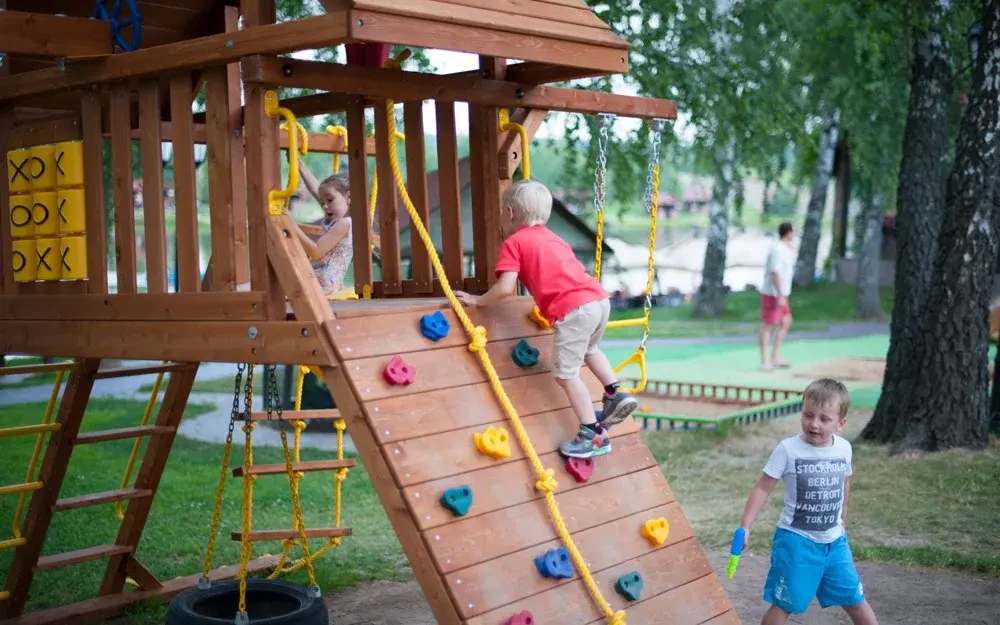


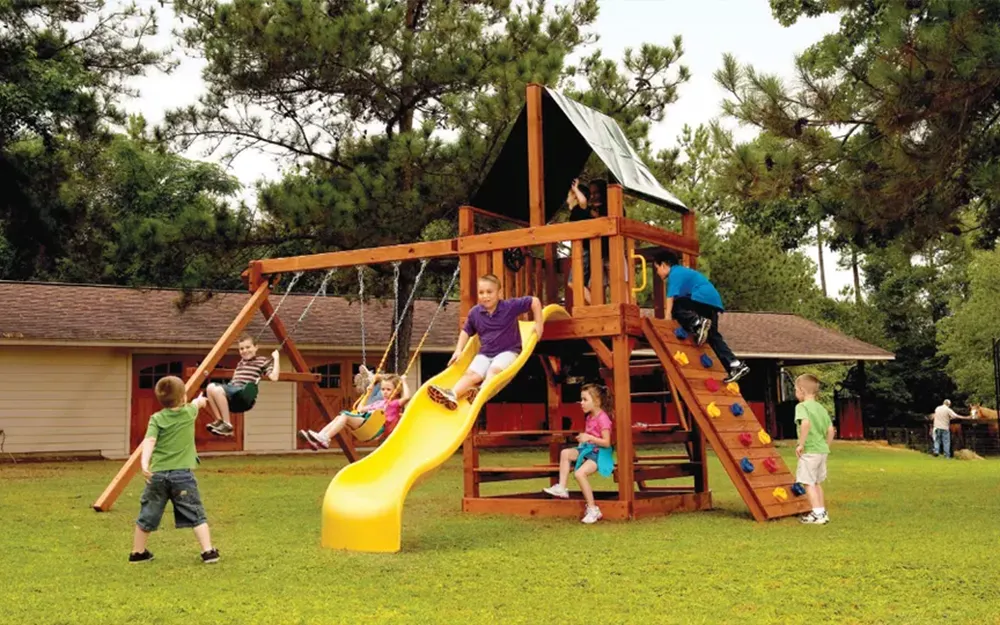
Many families choose to build swing sets in their backyards so children can enjoy childhood fun close to home. However, during the construction process, safety must be considered alongside fun. One of the most important safety factors, and an easily overlooked design element, is spacing. Designing reasonable spacing between swings is not for aesthetics but to prevent collisions during play, ensure the swings have a full range of motion, and maintain the stability of the entire structure.
To ensure children play safely, there are several minimum dimensions you need to know when building a swing set.
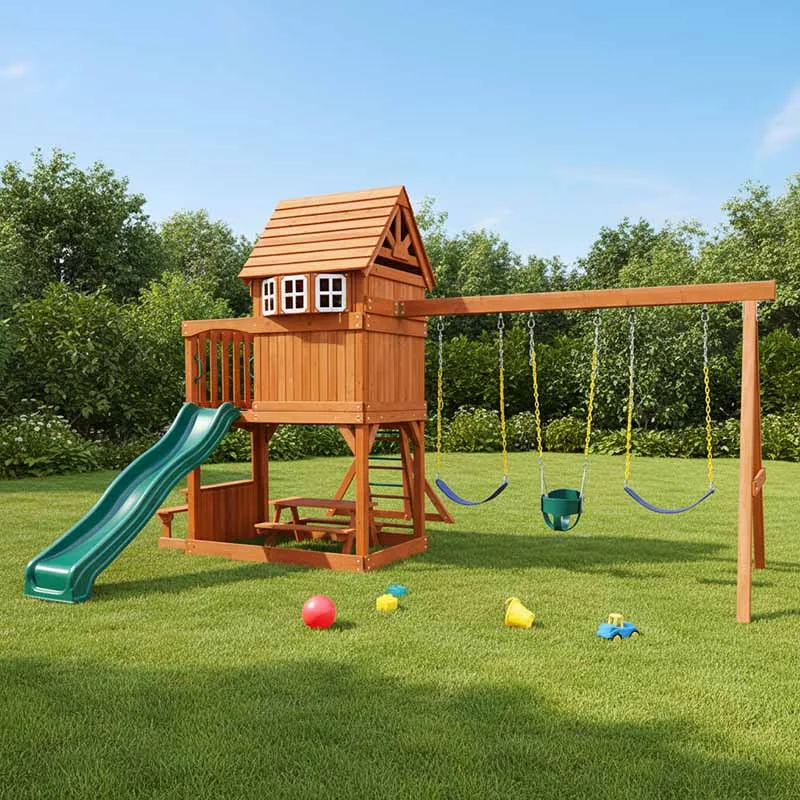
Core Spacing Requirements Between Swing Seats
Distance between swing seats: The spacing between swings on the beam should be at least 24 inches. This prevents children from colliding with each other if their paths veer slightly while swinging, which could affect their safety.
Distance from the support frame: There should be at least 30 inches of distance between a swing seat and the side support posts. This prevents children from accidentally hitting the frame during vigorous play.
While the minimum spacing between swings is 24 inches, many experts recommend a wider gap of 30 to 36 inches. A larger spacing provides more ample room and a better experience for children.
“Use Zone”: Front and Back Clearance
Another point that people often misjudge is the space required for the swing’s arc. This space is often underestimated. The “Use Zone” refers to the area where a child’s body might land if they fall or jump off the swing.
When children are swinging, you need to reserve a clear area in front of and behind each swing. The depth of this area should be twice the height of the swing’s crossbeam. This ensures they won’t hit anything while swinging back and forth.
For example: If your crossbeam height is 7 feet, you need to reserve 14 feet of clearance on both the front and back sides of the swing set.
Does the left and right side of the entire structure also need reserved space? The answer is yes. Please leave at least 6 feet of open space on both sides of the entire swing set structure to ensure it is far away from obstacles such as fences, trees, or walls.
Ground Preparation and Safety Surfacing
The height of the swing from the ground is also very important; otherwise, it may be dangerous if too high or affect the experience if too low.
Ground clearance: The bottom of the traditional belt swings should be 8 to 12 inches from the ground. Toddler swings should be hung higher, at approximately 24 inches.
Shock-absorbing surfacing: Never install a swing set on concrete, asphalt, or compacted dirt. Be sure to use shock-absorbing materials, such as rubber mulch, engineered wood fiber, or specialized playground turf.
Level ground: Be sure to install the swing set on flat, level ground. This helps ensure even weight distribution and prevents the set from tipping or deforming over time.
Spacing Adjustments for Different Types of Swings
The distances mentioned above are general requirements, but not all swings move the same way. Spacing for different types of swings should be adjusted based on their specific physical characteristics:
Standard belt swings: Follow the minimum 24-inch spacing requirement between seats.
Toddler swings (bucket swings): Since these swings are bulkier and toddlers have weaker control over their movements, extra clearance is required.
Specialized swings: Glider swings, tire swings, and disc swings often move in multiple directions. Gliders usually require 36 to 48 inches of lateral clearance, while tire swings require a full 360-degree clearance zone due to their rotational movement.